

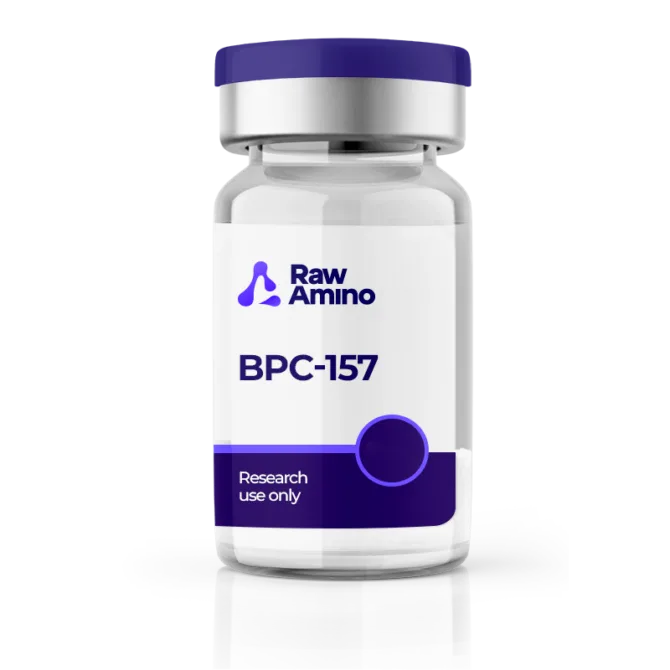
BPC-157 – 5MG/10MG
Price range: $54.00 through $92.00
Scientific Overview of BPC-157
BPC-157, also referred to as Body Protection Compound-157, is a synthetic peptide derived from a naturally occurring protein fragment found in the gastric system. Initial investigations suggest that it may play a role in supporting tissue regeneration, digestive processes, and protective responses against various forms of cellular stress.
Alternative Names: Body Protection Compound-157, Pentadecapeptide BPC-157
BPC-157 Studies and Research Data
BPC-157 Research on Wound Closure and Tissue Integrity
Preclinical studies propose that BPC-157 may support wound repair by influencing fibroblast activity. Fibroblasts are responsible for extracellular matrix production, including collagen and elastin. Reports suggest the peptide may enhance fibroblast migration and proliferation, potentially contributing to faster granulation and re-epithelialization. There are also indications that BPC-157 could modulate vascular endothelial growth factor (VEGF) pathways, which may assist in angiogenesis and remodeling processes.
BPC-157 Investigations into Antioxidant Pathways
Experimental research suggests that BPC-157 may reduce markers of oxidative stress, including nitric oxide and malondialdehyde. This antioxidant potential has been studied in the gastrointestinal tract, where it may help counteract reactive oxygen species. Additional studies have looked into engineered bacteria as a potential method to deliver BPC-157 in controlled laboratory settings.
Tendon and Connective Tissue Research
Animal-based tendon and ligament studies hypothesize that BPC-157 may enhance cellular migration and survival under stress conditions. Findings suggest it could stimulate fibroblast outgrowth, cytoskeletal organization, and adhesion by influencing proteins such as FAK and paxillin. These processes are considered important for connective tissue repair.
Vascular Growth and Collateralization
Evidence from animal models and cell cultures indicates that BPC-157 may encourage the formation of new blood vessels under ischemic conditions. This potential action appears linked to VEGFR2-related pathways, which are involved in nitric oxide signaling and endothelial cell activity. Such findings suggest a possible role in maintaining circulation during tissue damage.
Central Nervous System Research
Studies in murine models of traumatic brain injury propose that BPC-157 may attenuate some of the consequences of injury, including hemorrhage severity, edema, and survival rates in early post-injury periods. When administered prior to injury, the peptide appeared to reduce damage severity in controlled settings.
BPC-157 Experimental Use in Pollinator Studies
Unconventional research has explored BPC-157 in the context of bee colony collapse disorder. Experimental supplementation appeared to correlate with improved gastrointestinal resilience in bees and higher hive survival rates in field conditions.
Conclusion
BPC-157 is a laboratory-synthesized peptide that has been widely studied in animal and cell-based experiments for its potential roles in wound repair, vascular growth, oxidative stress modulation, and connective tissue studies. While findings suggest diverse biological activities, these remain under investigation and are not confirmed for practical applications.
| Size | 5mg, 10mg |
|---|
Be the first to review “BPC-157 – 5MG/10MG”
You must be logged in to post a review.
Related products
Peptides
Peptides
Peptides
Peptides
Peptides
Peptides
Peptides
Peptides
Reviews
There are no reviews yet.