

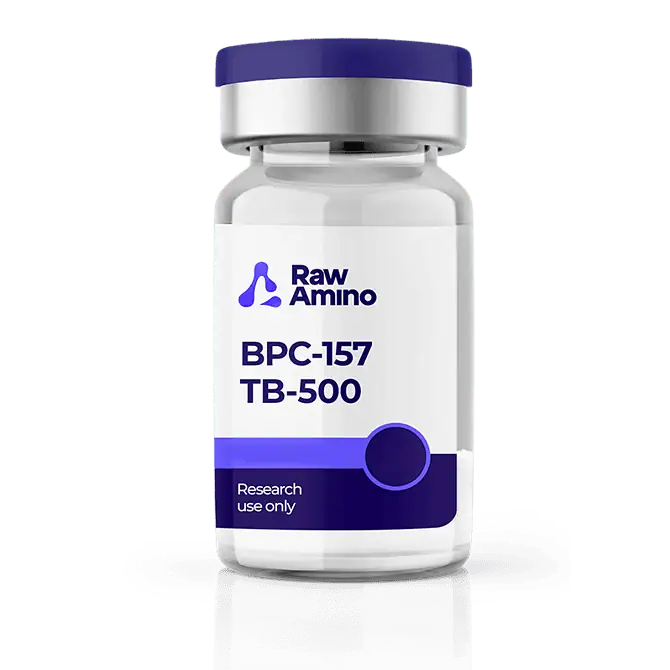
BPC-157 & TB-500 – 10MG/20MG
Price range: $110.00 through $200.00
Scientific Overview of BPC-157 & TB-500 Blend
BPC-157 and TB-500 are peptides that have been studied in relation to tissue repair processes. Scientific observations suggest that while they may act through different biochemical pathways, their combination has been hypothesized to provide complementary or synergistic contributions to wound research.
Alternative Names: BPC-157 (Body Protection Compound-157), TB-500 (Thymosin Beta-4 fragment)
BPC-157 & TB-500 Studies and Research Data
BPC-157 & TB-500 Research on Wound Models
BPC-157 has been investigated for its potential influence on tissue repair processes such as tendon healing and gastric injury models. Some studies suggest that it may modulate nitric oxide pathways and early growth response genes, which could play a role in the early stages of collagen organization. TB-500, on the other hand, has been linked to corneal wound research, where it appears to influence inflammatory signaling pathways and may reduce apoptosis in epithelial cells.
Cellular Migration Studies
Fibroblasts and immune cells are considered central to tissue recovery. BPC-157 appears to act at the gene expression level, potentially influencing actin production, whereas TB-500 is thought to interact more directly as an actin-binding protein. Together, they may contribute to fibroblast and immune cell migration by supporting actin filament formation, though these mechanisms remain under investigation.
BPC-157 & TB-500 Investigations into Angiogenesis
BPC-157 has been suggested to interact with vascular endothelial growth factor pathways, possibly enhancing vessel density in laboratory assays. TB-500 has also been studied in models of critical limb ischemia, with research indicating that it may interact with Notch and NF-κB pathways. These findings suggest a possible role for both compounds in supporting angiogenic responses in experimental models.
Exploration of Growth Hormone Interactions
Some research has proposed that BPC-157 might increase the expression of growth hormone receptors on fibroblasts, while TB-500 may support actin organization during fibroblast activity. This potential interaction has been suggested as a contributing factor in tissue regeneration models.
Conclusion
Research on BPC-157 and TB-500 indicates that both peptides have been studied in the context of wound healing, angiogenesis, and cellular activity. While their mechanisms may differ, their combination has been proposed to provide complementary or synergistic actions. Findings remain preliminary, and further investigation is required to clarify their roles.
| Size | 10MG, 20MG |
|---|
Be the first to review “BPC-157 & TB-500 – 10MG/20MG”
You must be logged in to post a review.
Related products
Blends
Blends
Blends
Reviews
There are no reviews yet.