

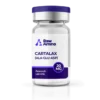

Cardiogen – 20MG
$60.00
Scientific Overview of Cardiogen
Cardiogen is a synthetic tetrapeptide that has been studied in relation to cardiovascular and cellular processes. Research suggests it may be connected to fibroblast activity, which plays a role in scar formation and tissue repair. Investigations also indicate potential relevance to cellular proliferation, apoptosis, and protein expression.
Alternative Names: AEDR (Ala-Glu-Asp-Arg)
Cardiogen Studies and Research Data
Investigations on Cardiac Remodeling
Studies in experimental models propose that Cardiogen may be linked to the proliferation of cardiomyocytes, potentially influencing fibroblast growth and scar tissue development. Research also indicates a possible connection to reduced expression of p53 protein, which may be associated with apoptotic regulation in myocardial tissue.
Observations in Prostate Cell Models
Research into fibroblast-related signaling has considered Cardiogen among peptides that may alter the expression of factors associated with aging and cellular senescence. Findings suggest it may contribute to bringing altered signaling activity closer to levels seen in younger cell cultures, which has been discussed in relation to prostate research.
Explorations in Tumor Research
Cardiogen has also been examined in tumor cell studies. While in cardiac research it appears to be linked with reduced apoptosis, certain investigations into tumor models reported the opposite trend — suggesting possible increases in apoptosis and necrotic changes within tumor tissues. Researchers have hypothesized that this may occur through changes in tumor vasculature.
Cardiogen Research on Fibroblasts and Cytoskeletal Proteins
Laboratory studies involving embryonic fibroblasts indicate that Cardiogen may penetrate cellular compartments including the nucleus. Research suggests potential stimulation of cytoskeletal proteins such as actin, vimentin, and tubulin, along with nuclear proteins lamin A and C. These findings have been interpreted as possibly connected to enhanced transcriptional activity and altered metabolism.
Cardiogen Experimental Studies on Myocardial Damage
In murine models of myocardial injury, Cardiogen has been studied for possible roles in reducing tissue necrosis, preserving glycogen content, and supporting mitochondrial function. Findings also suggest a potential threefold decrease in mortality compared to control groups, with hypotheses linking this to reparative processes and cardiomyocyte metabolism.
Conclusion
Cardiogen is a synthetic peptide that has been investigated in contexts ranging from cardiac remodeling and fibroblast activity to tumor biology and cytoskeletal regulation. Research remains preliminary and primarily experimental, with findings suggesting possible roles in apoptosis regulation, protein expression, and tissue recovery processes. Further investigation is needed to clarify its full range of biological implications.
Be the first to review “Cardiogen – 20MG”
You must be logged in to post a review.
Related products
Bioregulators
Bioregulators

Bioregulators
Bioregulators
Bioregulators

Bioregulators
Bioregulators
Bioregulators
Reviews
There are no reviews yet.