

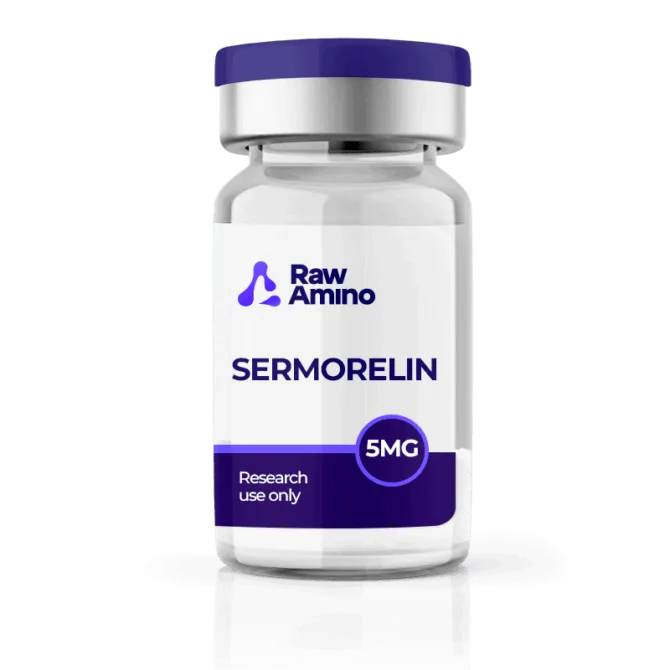
Sermorelin – 5MG
$46.00
Scientific Overview of Sermorelin
Sermorelin is categorized as a synthetic analog of growth hormone-releasing hormone (GHRH). Researchers suggest it may stimulate the pituitary gland through interactions with GHRH receptors, potentially leading to downstream growth hormone signaling. Sermorelin contains a truncated sequence derived from the naturally occurring GHRH, yet it is hypothesized to maintain receptor selectivity and biological activity. This selective targeting has made Sermorelin a frequent point of focus in studies seeking to better understand mechanisms of endocrine regulation, neurochemistry, and tissue repair.
Alternative Names: GRF 1-29, Sermorelin Acetate
Sermorelin Studies and Research Data
Investigations into Mechanistic Pathways
Sermorelin has been proposed to interact with receptors on somatotroph cells within the anterior pituitary gland. This interaction is thought to initiate intracellular signaling events, including cAMP-mediated cascades, which may influence calcium channel activity and vesicle release. Such pathways are theorized to contribute to intermittent growth hormone release while limiting broad alterations in other hormonal markers. Some findings also suggest its selective receptor activity might play a role in modulating the growth hormone–IGF-1 axis, which is associated with anabolic signaling.
Sermorelin Research on Cardiac Outcomes
In preclinical studies, Sermorelin has been explored in the context of cardiac remodeling following ischemic injury. Research using animal models suggests that it may reduce fibrotic tissue formation, support angiogenesis, and improve myocardial repair. Findings point to possible roles in limiting inflammatory signaling and supporting extracellular matrix restructuring, which may contribute to improved diastolic function and reduced scar development.
Exploration in Neurological Contexts
Studies involving animal models of epilepsy have investigated potential interactions between GHRH analogs and GABA receptors. Sermorelin has been examined for its potential to influence seizure thresholds, with early findings indicating that it may participate in modulating inhibitory pathways. Separately, research on sleep regulation has proposed links between Sermorelin, orexin secretion, and circadian signaling. These observations suggest that Sermorelin could contribute to understanding sleep-related neuroendocrine dynamics.
Sermorelin Investigations on Growth Hormone Regulation
Research has examined whether Sermorelin may stimulate growth hormone production without leading to desensitization. Unlike some compounds subject to tachyphylaxis, studies propose that Sermorelin might sustain receptor activity through mechanisms that preserve receptor responsiveness. Reports have described possible increases in circulating growth hormone and IGF-1 over time, alongside observations of tissue-level changes such as dermal thickness and cellular proliferation.
Research on Muscle and Tissue Composition
Some investigations have noted a potential increase in lean body mass and water retention linked to Sermorelin exposure. These outcomes are theorized to stem from enhanced IGF-1 signaling downstream of growth hormone release. Additional findings describe structural changes such as increases in skin thickness, which may reflect alterations in connective tissue activity.
Potential Synergism with Other Compounds
Sermorelin has also been studied in combination with ghrelin mimetics, which act through distinct receptors. Research suggests this dual activation may yield greater increases in IGF-1 levels than either peptide alone. Such results have led to ongoing exploration of possible complementary mechanisms between Sermorelin and growth hormone secretagogues.
Conclusion
Sermorelin has been widely investigated as a GHRH analog that may engage endocrine pathways with potential implications for growth hormone signaling, cardiovascular physiology, neurological regulation, and tissue structure. Research findings remain exploratory and suggest multiple possible avenues of interest, ranging from receptor interactions to systemic signaling. Its continued study is expected to contribute to further understanding of neuroendocrine and anabolic processes.
Be the first to review “Sermorelin – 5MG”
You must be logged in to post a review.
Related products
Peptides
Peptides
Peptides
Peptides
Peptides
Peptides
Peptides
Reviews
There are no reviews yet.