

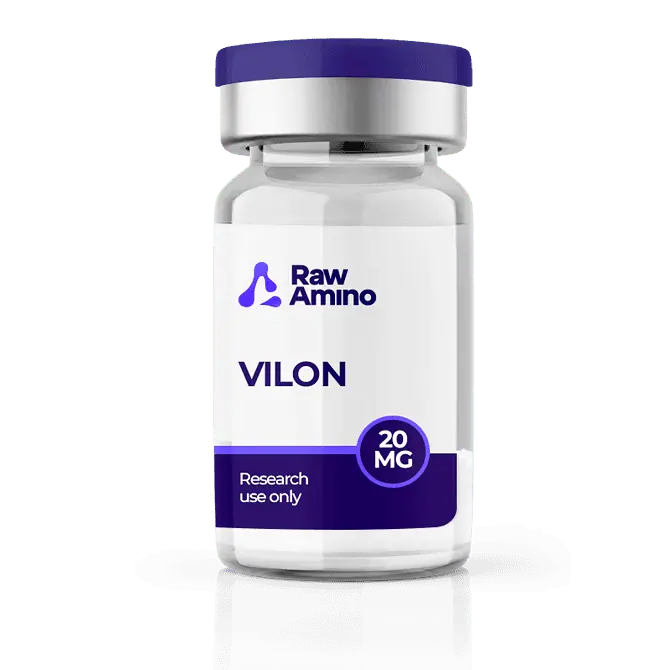
Vilon – 20MG
$60.00
Scientific Overview of Vilon
Vilon, also referred to as Lyslglutamic Acid, has been investigated as a peptide bioregulator with potential roles in gene regulation, immune support, and cellular maintenance. Research suggests it may interact with chromatin structures, influence signaling pathways, and contribute to processes associated with aging and stress response. Scientists have explored its relevance in tumor biology, cardiovascular studies, and longevity research, positioning it as a peptide of broad scientific interest.
Alternative Names: Lysylglutamate, Normophthal, Lyslglutamic Acid
Studies and Research Data
Investigations in Cellular Aging
Studies have suggested that Vilon may influence cellular longevity and tissue regeneration. In experimental models, it appeared to support muscle endurance, reduce age-related cellular decline, and protect against premature aging in thymic and splenic tissues exposed to radiation. Additional research indicates a potential role in stabilizing organ function and sustaining cellular performance under stress.
Vilon Research on Tumor Biology
In animal studies, Vilon was associated with a lower frequency of tumor formation and slower progression of malignant changes. Observations in bladder cancer models indicated fewer alterations in mucosal tissues and reduced hyperplasia. These findings suggest the peptide may influence pathways linked to tumor development, although mechanisms remain under investigation.
Vilon Studies on Immune Dynamics
Experimental findings indicate that Vilon may support immune coordination by influencing chromatin activity and interleukin signaling. Reports suggest it may enhance T-cell activity and differentiation, with observed increases in markers such as CD5. Such effects point toward a role in supporting balanced immune function and reactivating silenced genetic processes.
Observations in Vascular and Organ Systems
Research involving cardiovascular and renal models indicates that Vilon may play a role in regulating vascular permeability and maintaining balance in hemostatic processes. In studies combining Vilon with other peptides, shifts in cardiac gene expression were observed, while kidney studies suggested possible benefits in moderating fibrosis-related signaling molecules.
Conclusion
Current scientific literature positions Vilon as a peptide of interest in areas spanning cellular aging, tumor biology, immune system regulation, and vascular balance. Its potential mechanisms appear to involve chromatin modulation and signaling regulation, but research remains exploratory and no definitive outcomes have been established.
Be the first to review “Vilon – 20MG”
You must be logged in to post a review.
Related products
Bioregulators
Bioregulators
Bioregulators
Bioregulators
Bioregulators
Bioregulators
Bioregulators
Bioregulators
Reviews
There are no reviews yet.