


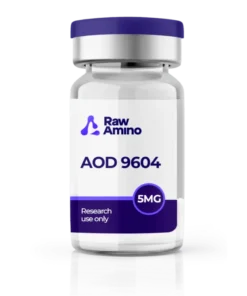
Fragment 176-191 – 5MG
$45.00
Scientific Overview of Fragment 176-191
Fragment 176-191, also referred to as hGH Fragment 176-191, tyr-hGH 177-191, or AOD-9604, is a synthetic segment derived from the terminal amino acid sequence of human growth hormone (hGH). Researchers suggest that this fragment may represent the portion of hGH associated with lipolytic activity. Modifications such as the substitution of tyrosine at the N-terminus appear to improve its stability compared to the native sequence. Investigations propose that the peptide may engage signaling pathways involved in lipid metabolism, thermogenesis, and tissue remodeling, though exact mechanisms remain under study.
Alternative Names: hGH Fragment 176-191, AOD-9604, tyr-hGH 177-191
Fragment 176-191 Studies and Research Data
Weight and Energy Pathways
Research in murine models has explored whether Fragment 176-191 interacts with beta-3 adrenergic receptors, potentially enhancing lipid release from adipose tissue. In obese models, exposure was associated with reduced weight and fat mass, alongside suggested increases in receptor RNA expression. Interestingly, parallel studies in receptor-deficient models still observed apparent weight changes, indicating that additional pathways, such as energy expenditure or fat oxidation, may be involved.
Fragment 176-191 Studies on Mass and Body Composition
A notable investigation (METAOD005) examined outcomes in human participants over a 12-week period. Groups receiving Fragment 176-191 were reported to display modest reductions in body weight compared to controls, with some groups also showing trends toward improved cholesterol and glucose tolerance. These findings suggest possible metabolic activity in clinical settings, though broader interpretation requires caution.
Joint and Cartilage Research Models
Experimental studies using rabbit osteoarthritis models have investigated whether Fragment 176-191 influences cartilage integrity. Models exposed to the peptide—particularly in combination with hyaluronic acid—appeared to demonstrate improved morphological and histopathological scores compared to saline or hyaluronic acid alone. The combined approach was associated with shorter recovery times, suggesting that the peptide may contribute to experimental frameworks assessing cartilage regeneration.
Glucose and Glycogen Pathways
In studies assessing glycogen metabolism, Fragment 176-191 was observed to slightly elevate blood glucose and lactate levels in murine models. These outcomes were linked to changes in glycogen synthase activity, where enzymes shifted toward an inactive state without altering overall concentrations. Such findings imply a possible role in regulating carbohydrate metabolism under certain conditions.
Fragment 176-191 has been researched for its potential role in lipid metabolism, body composition, joint models, and glucose regulation. While experimental findings point to diverse biological actions, mechanisms remain uncertain and outcomes appear context-dependent. Current literature emphasizes preliminary and model-based observations rather than definitive conclusions.
Be the first to review “Fragment 176-191 – 5MG”
You must be logged in to post a review.
Related products
Peptides
Peptides
Peptides
Peptides
Peptides

Peptides
Peptides
Reviews
There are no reviews yet.