

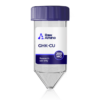
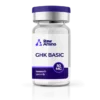

GHK Basic (Tripeptide-1) – 200MG
$156.00
Scientific Overview of GHK
GHK, also referred to as GHK-Cu (copper-bound form), is an endogenous tripeptide (glycyl-L-histidyl-L-lysine) naturally occurring in human plasma and tissues. It may exist both with and without copper binding, with copper affinity appearing to play a role in biological signaling. Endogenous levels are suggested to decline with age.
Alternative Names: GHK Basic, GHK-Cu
GHK Studies and Research Data
Cellular Stress Responses
Research suggests that GHK may influence gene expression linked to recuperative responses, including tissue remodeling and stress adaptation. Studies indicate it may support collagen and elastin production, and appears to modulate fibroblast activity following injury.
DNA Stability
Investigations propose that GHK may support the activity of DNA repair-related genes, potentially linked to mitigating age-associated decline. Evidence suggests possible gene reset mechanisms are involved, though this remains under study.
GHK and Inflammatory Pathways
Experimental models indicate that GHK might interfere with inflammatory signaling, including NF-κB and MAPK pathways. Reports suggest this may lead to decreased oxidative damage and reduced pro-inflammatory cytokine production.
GHK and Antioxidant Potential
Some findings propose that GHK may upregulate antioxidant-related genes while suppressing certain pro-oxidant signals. It appears to play a role in reducing free radical activity, which has been linked to cellular stress and photoaging.
Wound Recovery Models
Animal and cellular research indicates that GHK may contribute to wound closure, angiogenesis, and remodeling of connective tissue. Evidence suggests possible involvement in fibroblast activation, granulation tissue formation, and epithelialization processes.
GHK and Oncogene Regulation
Early-stage studies have proposed that GHK, particularly in copper-bound form, may participate in the modulation of tumor suppressor genes and growth regulation. Some experimental data point toward combinatorial actions when paired with other molecules, though findings are preliminary.
Conclusion
GHK has been studied for its potential roles in tissue remodeling, antioxidant activity, inflammation modulation, DNA repair, and cellular recovery models. While findings suggest promising areas of exploration, ongoing studies are needed to further clarify its biological significance.
Be the first to review “GHK Basic (Tripeptide-1) – 200MG”
You must be logged in to post a review.
Related products
Peptides
Peptides
Peptides
Peptides
Peptides
Peptides
Peptides
Peptides
Reviews
There are no reviews yet.