


CJC-1295 & GHRP-2 – 10MG
$83.00
Scientific Overview of CJC-1295 & GHRP-2
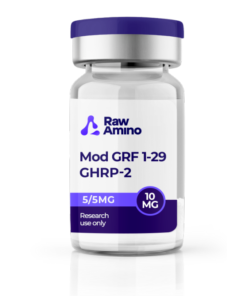
CJC-1295 and GHRP-2 are two synthetic peptides that have been explored for their potential interactions with receptors in the central nervous system and pituitary gland. Although they engage different receptor families, scientific investigations suggest that these peptides may lead to related signaling outcomes when studied together.
Alternative Names: CJC-1295: Modified GHRH analog, CJC-1295 no DAC, Mod GRF 1-29; GHRP-2: Growth Hormone Releasing Peptide-2, Pralmorelin
CJC-1295 & GHRP-2 Studies and Research Data
Research on IGF-1 Regulation
Investigations indicate that CJC-1295 may be connected to the regulation of IGF-1 levels by modulating growth hormone release. Reports in animal research suggest plasma growth hormone concentrations rose significantly after exposure, in some cases lasting several days. Subsequent rises in IGF-1 concentrations were noted, persisting for one to two weeks, with prolonged activity observed in repeated exposures. These findings have led to suggestions that growth hormone pathways activated by CJC-1295 may trigger downstream mechanisms, such as JAK-STAT signaling in liver cells, ultimately influencing IGF-1 gene transcription and release.
Pituitary Interaction Studies
CJC-1295 (Mod GRF 1-29) appears to engage with growth hormone-releasing hormone (GHRH) receptors located in pituitary somatotroph cells. Experimental data suggest the peptide remains detectable in plasma for extended periods and may stimulate higher growth hormone output compared to shorter analogs like GRF1-29. Observations include notable increases in baseline GH levels and measurable rises in circulating IGF-I. Mechanistically, this interaction is theorized to involve G-protein coupling, second messengers such as cAMP and IP3, and activation of protein kinases that regulate cellular signaling cascades.
Potential Synergism Between CJC-1295 and GHRP-2
While GHRP-2 is structurally distinct from ghrelin, studies indicate it may interact with the same receptor family (GHS-R1a). This interaction appears to initiate intracellular signaling cascades involving PLC, IP3, DAG, and calcium ion release, processes that may collectively amplify GH secretion. Notably, research exploring combinations of GHRH analogs and GHRP-2 observed more pronounced increases in pulsatile GH secretion than with either peptide alone, suggesting potential synergistic interactions.
CJC-1295 & GHRP-2: Appetite-Related Research
As a synthetic ghrelin mimetic, GHRP-2 has been studied for its possible impact on appetite signaling. Findings suggest that binding at hypothalamic receptors may promote neuropeptides such as NPY and AgRP, both linked to hunger pathways. This process may simultaneously reduce the influence of anorexigenic signals, shifting the balance toward appetite stimulation. Some reports also connect this receptor activity with reward-related brain circuits, raising the possibility that GHRP-2 could influence motivational aspects of food intake.
Conclusion
Scientific exploration of the CJC-1295 and GHRP-2 peptide blend centers on receptor binding in the pituitary and hypothalamus, growth hormone and IGF-1 signaling pathways, possible synergistic interactions, and appetite regulation. While laboratory research highlights intriguing biochemical mechanisms, further investigation is required to expand understanding of these pathways.
Be the first to review “CJC-1295 & GHRP-2 – 10MG”
You must be logged in to post a review.
Related products
Blends
Blends
Blends
Reviews
There are no reviews yet.