

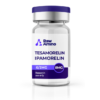

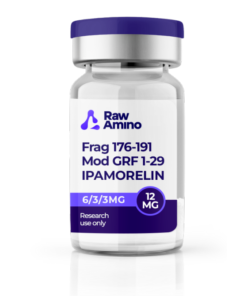
Tesamorelin & CJC-1295 (Mod GRF 1-29) & Ipamorelin – 12MG
$115.00
Scientific Overview of Tesamorelin & CJC-1295 (Mod GRF 1-29) & Ipamorelin
This research peptide blend combines three distinct synthetic analogs — Tesamorelin & CJC-1295 (Mod GRF 1-29) & Ipamorelin — each of which has been studied individually for their potential interactions with growth hormone regulatory systems. By merging these analogs, researchers aim to explore how their complementary mechanisms may provide a broader perspective on growth hormone modulation.
Tesamorelin is a stabilized analog of growth hormone–releasing hormone (GHRH), while CJC-1295 (Mod GRF 1-29) is a modified GHRH fragment designed to extend biological activity. Ipamorelin belongs to a family of pentapeptides often examined for their possible role as selective secretagogues. Together, this blend may allow researchers to examine coordinated responses across multiple pathways within the somatotropic axis.
Alternative Names: Tesamorelin (GHRH Analog), CJC-1295 (Modified GRF 1-29), Ipamorelin (Synthetic Pentapeptide)
Tesamorelin & CJC-1295 (Mod GRF 1-29) & Ipamorelin Studies and Research Data
Potential Pituitary Signaling Pathways
Research on Tesamorelin and CJC-1295 suggests that they may bind to GHRH receptors, potentially initiating intracellular signaling cascades involving cyclic adenosine monophosphate (cAMP) and protein kinase pathways. Ipamorelin, in contrast, appears to act at different receptor sites linked to ghrelin-like pathways. The combined action may provide models for evaluating multiple entry points into growth hormone regulation.
Investigations into Fat Distribution and Energy Balance
Studies on Tesamorelin have suggested possible influences on visceral adiposity, while Ipamorelin and CJC-1295 have been associated with research into energy balance and adiposity distribution. Some models suggest reductions in visceral fat markers when Tesamorelin is examined in isolation, while additional studies propose that peptide combinations may contribute to modulating lipid and glucose-related pathways.
Tesamorelin & CJC-1295 (Mod GRF 1-29) & Ipamorelin Research on Muscle Composition and Tissue Quality
Preclinical reports have noted that Tesamorelin exposure may be linked to changes in muscle density, whereas Ipamorelin has been examined for its potential association with anabolic signaling. CJC-1295 (Mod GRF 1-29), in extending GHRH activity, may amplify signals linked to muscle tissue studies. Blended, these compounds present opportunities for exploring possible synergies in muscle mass and tissue quality research.
Neurological and Cognitive Considerations
Some findings suggest that Tesamorelin, as a GHRH analog, may influence brain chemistry by altering levels of neurotransmitters such as GABA and myo-inositol. Ipamorelin has been examined in separate contexts for its potential neuroprotective properties. Together, the peptides may offer models for assessing the intersections between somatotropic signaling and cognitive processes.
Tesamorelin & CJC-1295 (Mod GRF 1-29) & Ipamorelin Studies on Liver and Metabolic Markers
Tesamorelin has been investigated in relation to hepatic lipid accumulation and liver fibrosis progression. The addition of CJC-1295 and Ipamorelin in this blend may provide broader ground for research into metabolic regulation, particularly concerning triglycerides, cholesterol markers, and insulin-related pathways.
Conclusion
The Tesamorelin & CJC-1295 (Mod GRF 1-29) & Ipamorelin peptide blend presents a research avenue into how multiple growth hormone–related pathways might converge. While each peptide has been studied individually for its potential influence on fat distribution, muscle tissue quality, neurological markers, and metabolic balance, their combination appears to provide a platform for exploring synergistic or complementary roles. Current findings remain preliminary and highlight possibilities rather than established outcomes.
Be the first to review “Tesamorelin & CJC-1295 (Mod GRF 1-29) & Ipamorelin – 12MG”
You must be logged in to post a review.
Related products
Blends
Blends
Reviews
There are no reviews yet.