

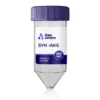

Syn-Coll (Palmitoyl Tripeptide-5) – 200MG
$212.00
Scientific Overview of Syn-Coll
Syn-Coll, also referred to as Palmitoyl Tripeptide-5 or Tripeptide-5, is a synthetic peptide designed as an analogue to the extracellular matrix protein thrombospondin-1 (TSP-1). TSP-1 is naturally present in connective tissues and is associated with collagen and elastin maintenance. Syn-Coll has been studied for its potential to replicate some of the biological signaling roles attributed to TSP-1, particularly in the context of transforming growth factor-beta (TGF-β) activity. Research interest in Syn-Coll has centered on its possible influence over collagen balance in skin models, where it may encourage protein synthesis and help slow protein degradation. The compound has been explored in laboratory systems to understand how small synthetic peptides might mimic complex extracellular signals relevant to tissue structure and organization.
Alternative Names: Palmitoyl Tripeptide-5, Tripeptide-5
Syn-Coll Studies and Research Data
Syn-Coll Investigations into Collagen Dynamics
Experimental findings suggest Syn-Coll may interact with signaling pathways linked to TGF-β, a growth factor thought to play a key role in collagen synthesis. Some reports propose that Syn-Coll may support type I and type III collagen production while simultaneously limiting degradation through interactions with enzymes such as matrix metalloproteinases. By potentially restraining these enzymes, the peptide appears to provide a model for examining ways to maintain extracellular matrix stability.
Explorations of Skin Surface Changes
Laboratory observations have noted that Syn-Coll may be associated with smoother, more uniform tissue appearance under test conditions. Controlled investigations propose that the compound might influence surface properties such as wrinkle visibility and roughness. In some experiments, Syn-Coll was reported to outperform comparison peptides in terms of measured changes to skin models, with results suggesting incremental improvements when observed over multiple weeks.
Syn-Coll Research on Modified Variants
In addition to Syn-Coll itself, scientists have synthesized derivatives by coupling the peptide with other compounds. One such modification involved linking Syn-Coll with an ascorbic acid analogue, aiming to improve stability and activity. This variant was studied for potential contributions to collagen generation and pigment regulation in cellular systems. Findings suggest that such modifications may expand the scope of Syn-Coll research into areas such as oxidative stress and pigmentation processes.
Role of TSP-1 Signaling Models
Since Syn-Coll is considered a synthetic counterpart of thrombospondin-1, studies have examined its relationship to wound repair and postnatal tissue development pathways. TSP-1 is known to influence activation of latent TGF-β, which in turn may regulate the formation of collagen-rich structures. Laboratory models propose that Syn-Coll may reproduce some of these interactions, thereby offering a simplified system for studying complex protein signaling in extracellular environments.
Conclusion
Syn-Coll is a synthetic tripeptide modeled on thrombospondin-1 and investigated for its potential influence on collagen-related processes. Research has highlighted its possible interactions with TGF-β signaling, its capacity to both encourage collagen production and limit degradation, and its exploratory use in studies of wrinkle visibility and skin structure. Additional work has examined derivatives of Syn-Coll that may further expand its experimental relevance. Collectively, findings suggest that Syn-Coll serves as a valuable model compound in the study of extracellular matrix regulation and peptide-based research.
Be the first to review “Syn-Coll (Palmitoyl Tripeptide-5) – 200MG”
You must be logged in to post a review.
Related products
Peptides

Peptides
Peptides
Peptides
Peptides
Peptides
Peptides
Peptides
Reviews
There are no reviews yet.